
2022-2023 AAI Peer-to-peer Learning Cohort
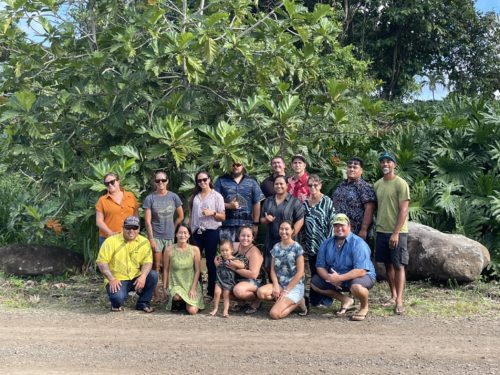
In April 2022, the AAI launched its 2022-2023 Peer-to-peer Learning Cohort (Peer Cohort). The Peer Cohort created a dedicated space to engage multiple AAI Partner Sites in reflection, ideation, and implementation of restoration actions based on their shared experience and lessons learned. The Peer Cohort brought together 15 representatives from across the six AAI Partner Sites via in-person, deep-dive sessions to explore a set of common themes that emerged in discussions across all Partner Sites. Topics included (in no particular order):

- Connecting with diverse sectors and user groups to advance restoration
- Connecting ma uka (terrestrial) and ma kai (marine) restoration efforts
- Government partnerships and collaborations
- Information and data management, storage, and sharing
- Legacy planning
- Sustainable finance, revenue generation, and value(s) add
-
-
Peer Cohort representatives participated in over 120hrs of discussion, exchange, and capacity development activities including project planning, prioritization, implementation, and professional networking. In each session, the group learned about stewardship and restoration efforts underway in each of the AAI Partner Sites. Through both individual and group work before and during the gathering, Peer Cohort participants were asked to describe in detail specific challenges and opportunities each community may be experiencing in relation to the specific thematic area.
Outcomes of the Peer Cohort include expedited implementation of new stewardship activities and agreements as a result of applying lessons learned in other Partner Sites. Participants also expanded back-end administrative support at multiple Site Partner organizations based on shared group learning. The Peer Cohort refined a suite of actions that were deemed appropriate for acceleration across each of the thematic areas, which was refined and released in the 2023 Ahupuaʻa Action Agenda. This list of actions provided a valuable pathway to inform a systems-focused approaches to address present-day stewardship and restoration needs and priorities as experienced by communities across the pae ʻāina.
Selected Output: Community-centered and Culturally-grounded Succession in Ahupuaʻa Stewardship and Restoration
Developed by the 2022-2023 Ahupuaʻa Accelerator Initiative (AAI) Peer-to-peer Learning Cohort, this diagram describes potential phases community groups may encounter when navigating the transition of kuleana in long-term community-centered stewardship and conservation efforts. This information is envisioned to be useful to inform proactive, long-term planning for ahupuaʻa stewardship and restoration. The diagram presents a set of perspectives shared among the Peer Cohort representatives and is NOT intended to characterize a singular, prescriptive approach to legacy and succession planning in Hawaiʻi stewardship.

 Peer Cohort representatives participated in over 120hrs of discussion, exchange, and capacity development activities including project planning, prioritization, implementation, and professional networking. In each session, the group learned about stewardship and restoration efforts underway in each of the AAI Partner Sites. Through both individual and group work before and during the gathering, Peer Cohort participants were asked to describe in detail specific challenges and opportunities each community may be experiencing in relation to the specific thematic area.